
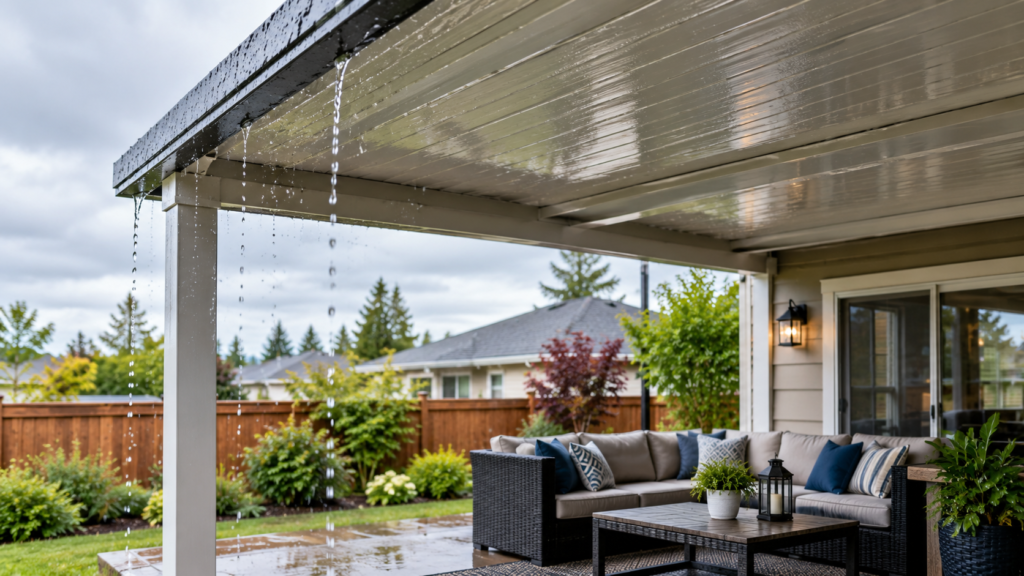
A patio cover is designed to provide shade, shelter, and a more comfortable outdoor space, but constant exposure to rain can eventually create problems. Small gaps, damaged roofing materials, clogged gutters, poor drainage, and failed flashing can all allow water to find its way through the structure. Once moisture gets into the wrong places, it can damage wood, insulation, fasteners, and nearby walls.
When a patio cover leaking issue appears, identifying the source early can help prevent more serious damage. Proper installation, routine inspections, and timely repairs can address common sources of water intrusion before they lead to costly structural problems.
What Causes a Patio Cover to Leak?
Leaks do not always come from an obvious hole in the roof. Water can travel along roofing materials and framing before appearing in a completely different location. Roof intersections, penetrations, seams, and drainage points deserve particular attention because they are common areas for water intrusion.
- Damaged or Aging Roofing Material
Patio covers can develop cracked, lifted, punctured, or deteriorated roofing materials over time. Repeated exposure to sun, rain, wind, and temperature changes can gradually weaken the surface.
Even a small damaged area can allow water underneath the roofing layer. During heavy rainfall, that moisture can spread before finding an opening into the patio structure.
- Poor Flashing Around Connections
Flashing helps direct water away from vulnerable transitions. Roof-to-wall intersections are particularly important because water can collect or run toward the connection during storms.
Building Science Education identifies roof and wall intersections as vulnerable areas and recommends properly integrated flashing to direct water away from the structure.
- Clogged Gutters and Downspouts
When gutters become packed with leaves, dirt, and other debris, rainwater may overflow instead of following its intended drainage path. That excess water can reach fascia boards, walls, and other areas that were not designed to handle constant moisture.
Maintaining clear gutters and downspouts is a straightforward yet essential aspect of caring for a patio roof.
- Insufficient Roof Slope
Water needs a clear path to move off a patio roof. If the roof does not provide adequate drainage, water may remain on the surface longer than intended.
Standing water increases moisture exposure and can place additional stress on roofing materials and seams. Proper roof drainage is a fundamental part of effective water management.
Common Patio Cover Leak Problems
Different problems can produce similar symptoms, so identifying the likely source helps determine the right solution.
| Problem | Common Warning Sign | Prevention |
|---|---|---|
| Damaged roofing | Drips or visible cracks | Inspect and repair damaged sections |
| Failed flashing | Leaks near walls or edges | Check flashing connections regularly |
| Clogged drainage | Overflow during rainfall | Clean gutters and downspouts |
| Poor slope | Water pooling after storms | Ensure proper drainage during installation |
| Open seams | Moisture around joints | Seal and maintain roof connections |
| Roof penetrations | Localized leaks | Properly flash and seal penetrations |
How Do You Prevent Patio Cover Leaks?
Preventing leaks starts with controlling how water reaches, moves across, and leaves the patio cover. A well-maintained roof should shed water rather than allow moisture to collect around joints and vulnerable areas.
- Inspect the Roof Regularly
A visual inspection can reveal cracked materials, loose fasteners, deteriorated sealants, damaged flashing, and areas where water may be collecting. Inspections are especially useful after major storms.
- Keep Gutters and Downspouts Clear
Remove leaves and debris before they block drainage. Downspouts should also discharge water away from the structure instead of allowing runoff to collect beside posts or walls.
- Check Roof and Wall Connections
Look closely at locations where the patio roof meets the house, as these areas can be common points for patio roof leaks. Flashing should direct water outward and integrate with the surrounding drainage layers. Proper flashing helps move water away from building assemblies rather than allowing moisture to collect or enter vulnerable areas.
- Seal Appropriate Joints
A compatible exterior sealant can help protect certain seams and joints from moisture. However, sealant should not be treated as a substitute for properly installed flashing or damaged roofing materials.
How to Fix a Leaking Patio Cover
The correct repair depends on where the water is entering and how extensive the damage has become. Finding the visible drip is only the first step because water can travel beneath roofing materials before appearing below.
- Find the Actual Source
Inspect the roof surface, seams, flashing, penetrations, gutters, and nearby walls. Look for staining, soft materials, corrosion, cracked sealants, or visible openings.
- Replace Damaged Materials
Cracked or deteriorated roofing sections may need replacement instead of another layer of sealant. Continuing to patch severely damaged materials can leave the underlying problem unresolved.
- Repair or Replace Flashing
Damaged or incorrectly positioned flashing should be corrected so water is directed away from vulnerable connections. Flashing is especially important at roof and wall intersections and around penetrations.
- Address Drainage Problems
If water is pooling because of poor drainage, repairing the visible leak alone will not solve the underlying issue. The drainage path needs to be corrected so rainwater can leave the roof efficiently.
Protecting Different Patio Cover Designs
The design of the patio cover can influence where water management problems develop.
- Sloped Patio Covers
Sloped covers generally provide a natural path for rainwater to run toward an edge or drainage system. Gutters, flashing, and roof edges still need regular inspection.
- Flat or Low-Slope Covers
Low-slope designs require careful attention to drainage because water may remain on the surface if the roof does not drain properly. Proper design and installation are particularly important for preventing ponding.
- Attached Patio Covers
Attached structures require careful treatment where the patio roof meets the home’s exterior wall. This connection needs properly integrated flashing and moisture management to reduce the risk of water entering the building envelope. When planning a new lean to patio cover, Sunno Construction can incorporate appropriate drainage, roofing, and connection details to help protect the structure from rain and moisture.
When Should a Patio Cover Be Professionally Inspected?
Some leaks can be addressed through routine maintenance, but professional attention may be appropriate when water repeatedly enters the same location, structural materials feel soft, staining continues after repairs, or the source of the leak cannot be identified.
Persistent moisture can contribute to material deterioration and create conditions associated with mold and structural damage.
Professional inspection can help determine if the problem involves roofing materials, flashing, drainage, structural connections, or several issues at once.
Final Thoughts
A leaking patio cover is often the result of several manageable issues, such as damaged roofing, failed flashing, clogged drainage, poor slope, or deteriorated seams. Regular inspections and prompt maintenance can reduce moisture exposure and help protect the structure. When leaks appear, identifying the actual source is essential because water can travel away from the point where it first enters.
For larger repairs or new patio construction, proper water management should be considered from the design stage rather than treated as an afterthought.
For homeowners seeking experienced patio enclosure contractors, Sunno Construction can provide practical guidance and professional workmanship for a comfortable outdoor space built to handle the elements.

