
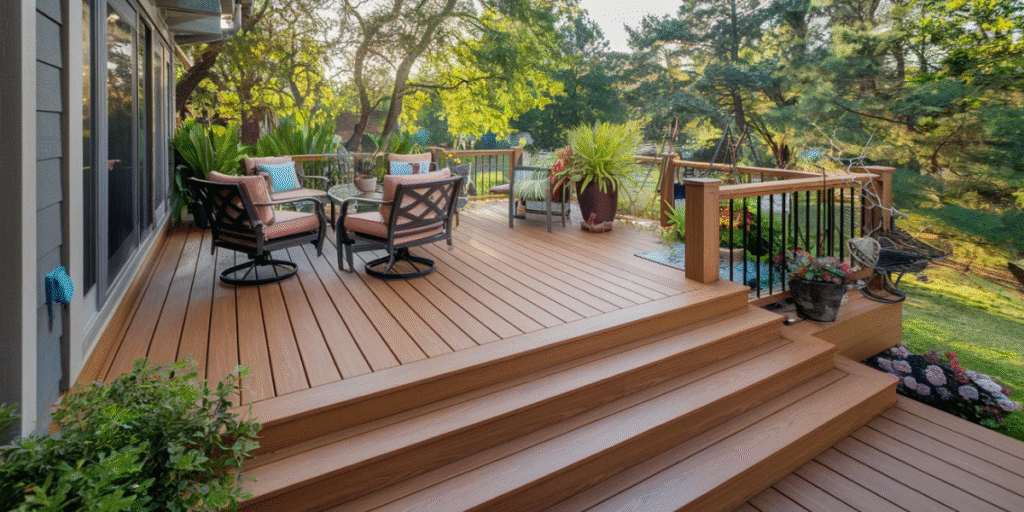
Choosing the right decking material is an important decision for any homeowner planning an outdoor project. Decking should look attractive, last for years, and require a level of maintenance that fits daily life. Two popular modern options are vinyl and composite decking. Understanding composite vs vinyl decking helps homeowners make a confident choice that supports long-term satisfaction.
Both materials offer advantages compared to traditional wood decking. They resist moisture better than wood and typically require less upkeep. Still, important differences exist between these materials. Comparing vinyl vs composite decking helps clarify which option works best for specific needs and outdoor environments.
This guide explains key differences in durability, cost, maintenance, appearance, and comfort to help homeowners make informed decisions.
Understanding Vinyl Decking
Vinyl decking is made primarily from polyvinyl chloride. This synthetic material is designed to resist moisture and surface damage. Vinyl boards often include protective coatings that reduce fading and staining.
Vinyl surfaces are typically smooth and consistent in appearance. Many products are manufactured in uniform colors and textures. This creates a clean and modern look that appeals to homeowners who want a simple finish.
Vinyl decking performs well in wet climates because it resists water absorption. Unlike wood, vinyl does not rot or splinter. This makes vinyl attractive for homeowners seeking low-maintenance solutions.
Understanding Composite Decking
Composite decking combines recycled wood fibers with plastic. The mixture produces boards that resemble wood while offering improved resistance to weather and insects. Many homeowners consider vinyl composite decking products because they provide durability along with natural-looking finishes.
Composite boards often feature grain patterns that imitate real wood. This makes them appealing to homeowners who want a traditional deck appearance without extensive maintenance.
Composite decking requires occasional cleaning but usually does not need staining or sealing. The material holds color well and resists fading when properly maintained.
Material Differences:
1. Appearance Differences
Appearance often plays a major role in choosing between composite vs. vinyl decking options. Vinyl decks usually have a smooth surface with consistent coloring. This creates a modern and uniform look. Composite decking tends to resemble real wood more closely. Grain patterns and color variations give composite boards a natural appearance that many homeowners prefer. Homeowners who want a wood-like appearance often lean toward composite. Those who prefer a sleek and consistent finish often prefer vinyl.
2. Durability and Weather Resistance
Both materials are designed for outdoor use, but they perform differently under certain conditions. Vinyl resists moisture very effectively. Rain and humidity have little impact on the structure of vinyl boards. Composite decking also resists moisture but contains wood fibers that may expand slightly in damp conditions. Proper installation helps reduce this risk.
When comparing vinyl vs composite decking, both materials offer long service life. Vinyl resists mold growth more easily, while composite tends to handle impact and heavy traffic well. Extreme sunlight can affect both materials. Lighter colors typically perform better in sunny climates.
3. Maintenance Requirements
Maintenance needs influence many decking decisions. Vinyl decking usually requires only basic cleaning with soap and water. Dirt and debris wash away easily from smooth surfaces. Composite decking requires similar cleaning but may need gentle brushing to remove debris from textured grain patterns. Periodic washing keeps composite boards looking fresh. When evaluating composite vs. vinyl decking, both materials require less maintenance than wood. Homeowners who want the simplest care routines often choose vinyl.
4. Comfort and Surface Temperature
Surface temperature becomes important during warm weather. Dark-colored decking materials absorb more heat than lighter ones. Composite boards can retain warmth because of their density and darker color options. Vinyl surfaces often stay slightly cooler if light shades are selected. Comfort under bare feet plays a role in outdoor enjoyment. Choosing lighter colors helps improve comfort regardless of material type.
5. Cost Considerations
Cost varies by brand, design, and installation complexity. Vinyl decking often has higher initial material costs compared to standard composite boards. Premium composite products may cost similar amounts. Installation costs also affect the total price. Some systems require specialized fasteners or framing methods. Budget planning should include long-term value as well as initial expenses. Both materials last longer than wood, which may reduce replacement costs over time.
6. Environmental Considerations
Many composite decking products contain recycled materials. This reduces the demand for new wood and supports environmental conservation. Vinyl decking is fully synthetic and does not use wood fibers. Manufacturing processes differ depending on the brand. Homeowners concerned about sustainability often compare vinyl composite decking products carefully to understand material sources and recycling potential.
7. Installation Differences
Installation methods vary between materials. Vinyl decking systems often require careful spacing and fastening to allow expansion in warm temperatures. Composite decking uses hidden fasteners or screws, depending on the design. Professional installation helps ensure proper spacing and support. Reliable installation improves durability and performance. Skilled professionals help prevent common problems such as uneven boards or poor drainage.
8. Professional Installation Support
Choosing the right material becomes easier with expert guidance. A qualified exterior remodeling contractor from us can evaluate the property and recommend decking solutions that match climate conditions and structural requirements.
9. Longevity and Warranty
Both materials often come with manufacturer warranties. Vinyl decking warranties frequently cover fading and staining for extended periods. Composite decking warranties typically include structural performance and surface protection. Warranty terms vary among manufacturers. Comparing warranty coverage helps homeowners evaluate long-term value when deciding between vinyl vs. composite decking options.
10. Safety and Slip Resistance
Deck safety is important for households with children and guests. Many vinyl surfaces include textured finishes that improve traction. Composite boards often feature grain patterns that help reduce slipping. Choosing products designed for outdoor safety improves usability during rainy conditions. Slip resistance should be considered along with maintenance and appearance.
Making the Right Choice
Selecting the best decking material depends on individual priorities. Vinyl offers simple maintenance and strong moisture resistance. Composite offers a natural appearance and a durable structure.
Understanding the differences between these materials allows homeowners to match decking options to their lifestyle and outdoor environment. Careful comparison of durability, cost, and maintenance leads to better long-term satisfaction.
Final Thoughts
Comparing vinyl composite decking options helps homeowners make informed decisions about outdoor improvements. Vinyl decking provides reliable moisture resistance and easy cleaning. Composite decking offers a wood-like appearance and strong durability. Evaluating vinyl vs composite decking carefully helps ensure that the final choice fits both practical needs and design goals. For homeowners planning additional improvements, adding a quality Skylift patio cover can provide shade and comfort while protecting decking surfaces from long-term sun exposure. We provide professional decking installation and outdoor improvement services designed for lasting quality.

