
There is something deeply satisfying about a bright, spotless fence framing your property. But if you have a vinyl fence, you have probably noticed that it does not stay that way on its own. Over time, green algae, muddy splash marks, and stubborn mildew creep in, dulling what used to shine. Luckily, you do not need professional equipment or harsh chemicals to bring back that original brilliance with proper cleaning of a white vinyl fence.
This guide covers everything you need to know about how to clean a vinyl fence so your yard looks its best year-round.
Why Regular Cleaning Actually Matters
A lot of homeowners assume that because vinyl does not rot or splinter the way wood does, it basically takes care of itself. That is only partly true. Dirt, organic material, and moisture combine over time to create conditions where mold, mildew, and algae thrive right on the surface of your fence. Leaving those deposits untreated does not just make your fence look neglected. The buildup causes discoloration that becomes harder to remove the longer it sits.
The bright side is that vinyl is non-porous, meaning stains stay on the surface rather than soaking in. That makes it far more forgiving than wood or metal, as long as you stay on top of it.
What You Will Need
Before diving in, gather a garden hose with a spray nozzle, a soft-bristle brush or sponge, a microfiber cloth, a bucket, mild dish soap, and warm water. For tougher stains, you may also want white vinegar, baking soda, or a diluted oxygen bleach solution. One thing to avoid entirely is abrasive scrubbing pads or harsh chemical solvents. These scratch the glossy surface of your vinyl, permanently dulling its appearance.
Sunno Construction is a licensed and insured family-owned exterior remodeling contractor. Our team offers complimentary on-site assessments and flexible financing to help bring your outdoor vision to life. Get in touch today to learn more!
How Do You Clean a Vinyl Fence: Step-by-Step Guide
Knowing how to clean a vinyl fence properly makes the difference between a quick Saturday chore and an all-day frustration.
Step 1: Rinse First
Start by giving the entire fence a solid rinse from top to bottom with your garden hose. This removes loose dirt, pollen, grass clippings, and bird droppings before scrubbing begins. Pay extra attention to the base of the fence where mud and soil tend to collect after rain.
Step 2: Apply Your Cleaning Solution
A basic blend of warm water with a few drops of liquid dish soap handles most everyday grime effectively. If you are dealing with harder deposits, add a quarter cup of white vinegar per gallon of water. Vinegar is naturally acidic and works well against light mold and mineral buildup without harming nearby plants.
Step 3: Scrub Panel by Panel
Soak your soft-bristle brush in the solution and gently scrub in small, circular motions, working one panel at a time. For areas with heavier staining, let the solution sit for a couple of minutes before scrubbing to loosen the buildup. A microfiber cloth works well for the final wipe-down, picking up any residue a brush might leave behind.
Step 4: Rinse Thoroughly
Rinse each section completely before moving on. Leaving soapy residue to dry on the surface actually attracts more dirt faster. Make sure the water runs clear off every panel.
Step 5: Target Stubborn Stains
Some stains need a little extra attention. For mold and mildew, spray a mix of one part white vinegar to two parts water directly on the affected area, let it sit for ten minutes, then scrub and rinse. For green algae, a baking soda paste applied with a damp sponge works well. Scuff marks from furniture or equipment typically respond to a baking soda-and-water paste rubbed gently with a damp cloth.
Cleaning and Maintaining a White Vinyl Fence
Keeping a white vinyl fence looking fresh does not require complicated methods, but it does require consistency. With the right approach and routine care, you can prevent buildup, maintain brightness, and extend your fence’s lifespan while learning how to properly wash a vinyl fence.
- Regular cleaning matters as much as the method used
- Stains become harder to remove the longer they sit on white vinyl
- A diluted oxygen bleach solution helps restore brightness without causing yellowing
- Apply the solution with a soft brush, allow it to sit briefly, then rinse thoroughly
- Avoid products with acetone, benzene, or petroleum-based ingredients since they can weaken the vinyl and cause discoloration when trying to clean white vinyl fence surfaces
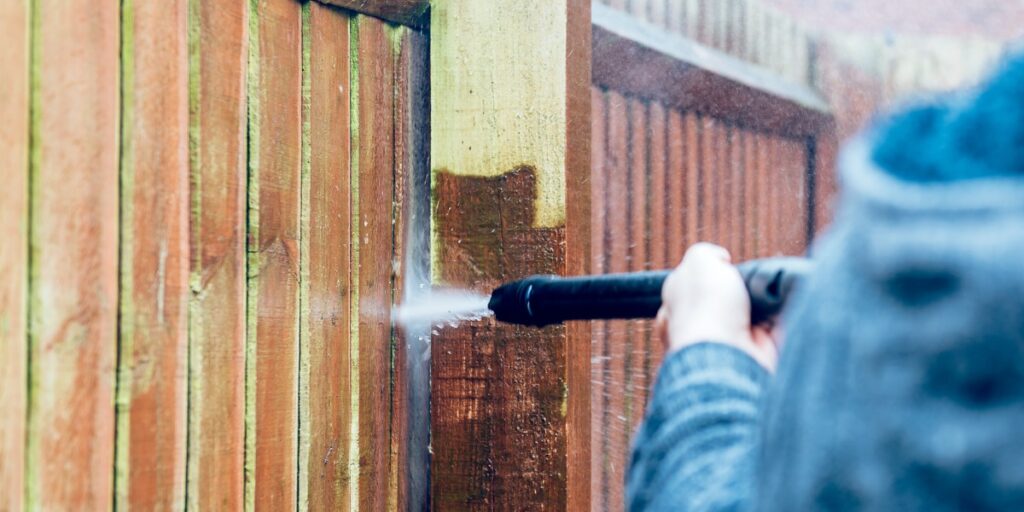
Using a Pressure Washer
- Pressure washing is efficient for cleaning long stretches of fencing
- Keep pressure levels between 1,200 and 1,500 PSI
- Use a wide-angle nozzle such as 25 or 40 degrees
- Hold the wand about 12 to 18 inches away from the surface and move it in steady, overlapping strokes
- Start cleaning from the top and work downward to prevent streaking
Keeping It Clean Year-Round
- Consistent upkeep helps maintain a bright, clean appearance
- Rinse the fence with a garden hose once a month
- Perform a full soap-and-scrub cleaning every three to four months
- Plan a deeper cleaning once a year
- Trim back plants and shrubs to prevent moisture buildup that can lead to algae and mold growth.
Conclusion
How do you clean a vinyl fence and keep it that way over the long term? It really comes down to using the right products, following a simple process, and staying consistent. With a monthly rinse and a few deeper cleans throughout the year, your fence can look nearly as good as the day it was installed. A well-maintained fence reflects the care you put into your entire property, and that is always worth the effort. Sunno Construction specializes in fencing, decking, patio covers, and general contracting for residential and commercial properties. If you have been thinking about adding a skylift patio cover or upgrading your outdoor space, our team is ready to help. Take the first step toward building a backyard you will truly enjoy!

