
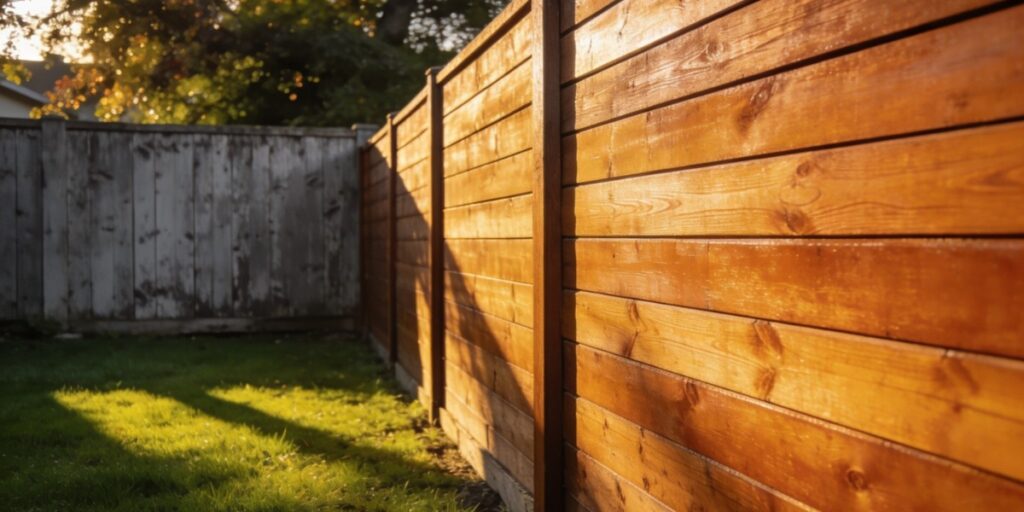
You spent good money on a wood fence. It looks clean, solid, and sharp right after installation. But fast forward a year or two, and you start noticing something: the color is fading, the wood looks tired, maybe even a little gray. That’s not bad luck. That’s what happens when a fence doesn’t get the maintenance it deserves.
Staining is one of the most effective ways to protect your investment, and yet it’s one of the most overlooked. So if you’ve been wondering how often you should stain your fence, you’re asking exactly the right question. Let’s get into it!
Why Staining a Wood Fence Actually Matters
Wood is a natural material, and nature has a way of reclaiming it. Rain, UV rays, temperature swings, and humidity all wear down the surface over time. Without a protective barrier, the wood absorbs moisture, expands, contracts, cracks, and eventually rots.
Staining a wood fence does several things at once. It seals the surface against moisture, slows UV damage, and prevents mold and mildew from taking hold. The good news is that staining is not complicated. The challenge is knowing when to do it and how often to keep doing it.
If you need the professional touch of outdoor living contractors, Sunno Construction specializes in fencing, decking, and patio covers. Our team also helps homeowners stay ahead of maintenance. Get in touch to schedule yours today!
When to Stain a New Fence: Timing Your First Application
A lot of homeowners make the mistake of staining their new fence right away, thinking they’re being proactive. Actually, that can backfire. When to stain a new fence comes down to the type of wood and how dry it is.
The Water Bead Test
Here’s a simple check: drop a small amount of water on the fence boards. If it beads up on the surface, the wood is still too wet and will resist the stain. If the water soaks in quickly, the wood is ready to go.
Drying Times by Wood Type
- Pressure-treated lumber needs three to six months to dry and stabilize before staining. Rushing it means the stain won’t bond properly and may peel or look blotchy.
- Cedar and redwood have natural oils that can repel stains if the wood hasn’t acclimated. Wait four to six weeks as a general guideline, then confirm with the water bead test.
- Kiln-dried lumber is drier to begin with and is typically ready in one to two months. Even so, always run the water test before moving forward.
Sealing a Fence for the First Time: Do It Right
If you just had a new fence installed, the first application is the most important one you will ever do. Sealing a fence correctly for the first time sets the tone for every application that follows, and cutting corners here often means redoing the whole job sooner than expected.
Clean and Dry the Surface First
Before any stain goes on, power-wash the fence to remove dirt, dust, and mold. Let it dry completely, at least 24 to 48 hours. Stain applied to damp wood will not bond properly, and you will end up with a blotchy, uneven finish that peels within months.
Pick the Right Stain for Your Wood
Semi-transparent stains hit a sweet spot for most homeowners, letting the natural wood grain show through while still delivering solid protection. Oil-based stains penetrate deeper into the fibers, which is why many professionals prefer them for exterior fencing. Solid stains offer the most coverage but hide the grain entirely, good for older wood with visible wear.
Time It Right
Apply stain when temperatures are between 50 and 80 degrees Fahrenheit, humidity is low, and no rain is expected for at least 24 hours. Avoid staining in direct sunlight, as it causes the stain to dry too quickly and leave lap marks.
Work Smart, Not Fast
Move in sections of two to three boards at a time, working top to bottom, and always coat the end grain where moisture tends to enter first. Rushing this step is one of the most common reasons homeowners wonder how often they should stain their fence, because a poor first application breaks down faster and needs to be redone sooner than it should.
How Much Stain Do I Need for the Fence
At some point during planning, every homeowner asks, “How much stain do I need for the fence?” It’s a practical question, and one that’s easy to miscalculate. As a general rule, one gallon covers roughly 150 to 200 square feet of smooth wood. For rougher or older wood with more texture and absorption, that coverage drops to around 75 to 150 square feet per gallon.
To get your estimate, multiply your fence’s total length by its height. If your fence has gaps between boards, trim that number down by about 20 to 30 percent. And always pick up a little more than your calculation suggests; running out mid-project is far more frustrating than having a small amount left over.
Conclusion
Your fence works hard every single day, rain, sun, wind, and everything in between. Keeping it protected doesn’t require a massive time investment, just a consistent one. Restain every two to three years as your baseline, adjust based on your climate and wood type, and stay alert to the early warning signs of wear. Get your timing right on that first application, prep the surface properly, and use a quality stain designed for outdoor use. That’s really all it takes to keep a fence looking great and lasting for decades. Want to install a hog wire fence in Portland? Sunno Construction brings quality craftsmanship and honest guidance to every project. Contact us to learn how we can upgrade your backyard!

